3. Cost-Effective & Efficient
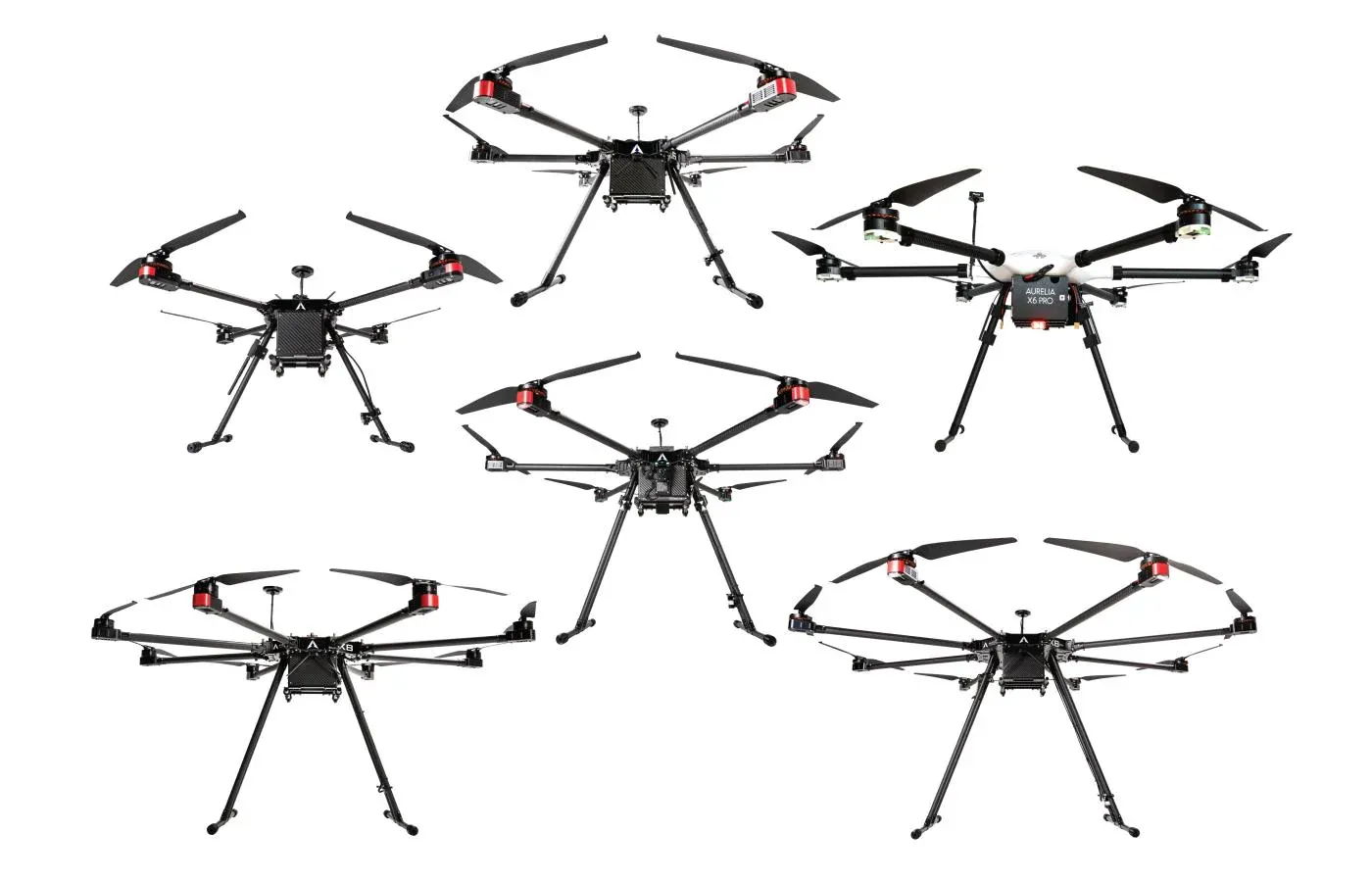
Compared with large cranes, helicopters, and manual handling teams, rotor lifting drones have lower procurement and operating costs. They can complete short-distance heavy-object transportation, material distribution, and equipment hoisting in minutes, greatly improving operational efficiency and shortening project cycles. Meanwhile, drone operations reduce manual participation, lowering labor costs and accident risks.
4. High Safety & Strong Redundancy
Industrial-grade rotor lifting drones are equipped with multi-rotor fault tolerance systems. If a single motor or rotor fails, the remaining rotors can still support stable flight and safe landing. In addition, intelligent functions such as automatic obstacle avoidance, low-battery return, and emergency hovering further ensure the safety of equipment, payloads, and on-site personnel.
Main Real-World Applications of Rotor Lifting Drones
With the continuous upgrade of drone technology, rotor lifting drones have been widely applied in commercial, industrial, and public service fields, becoming a key tool for intelligent and unmanned operation.
1. Construction & Engineering Hoisting
On construction sites, rotor lifting drones are used to transport building materials such as steel bars, cement bags, and small mechanical parts to high-altitude and narrow construction areas. They replace manual high-altitude handling, effectively avoiding fall risks and improving the efficiency of high-rise construction operations. In bridge and road engineering, drones can also hoist detection equipment and construction auxiliary tools to complete high-altitude detection and layout tasks.
2. Agricultural Production & Plant Protection
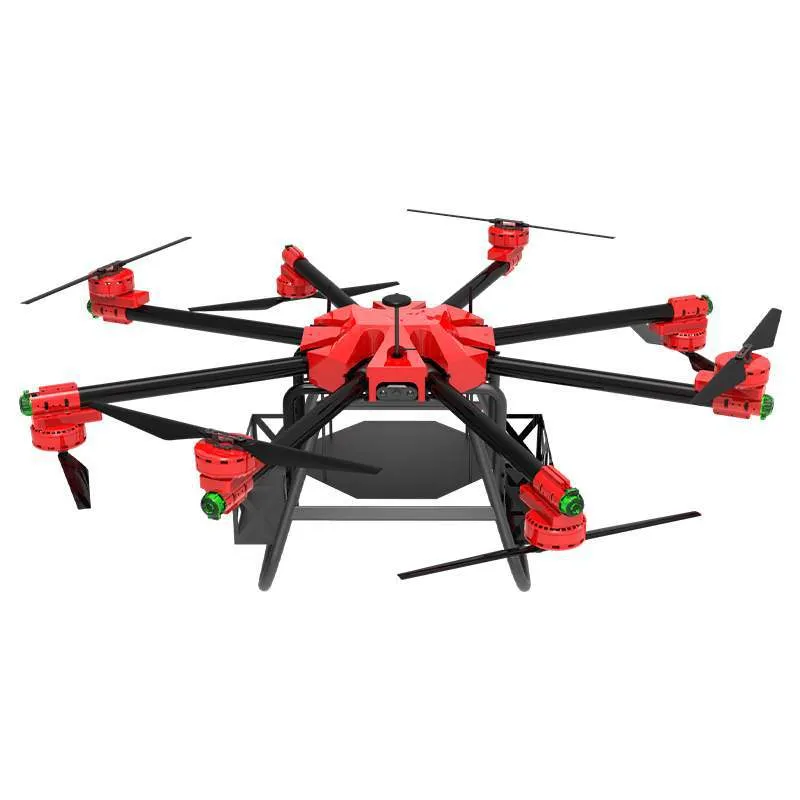
Agricultural heavy-lift rotor drones are widely used in large-scale farmland operations. They can carry large-capacity pesticide tanks, fertilizer boxes, and seed spreaders to complete automated spraying, fertilizing, and seeding work. With precise flight control and uniform spraying technology, they improve agricultural operation efficiency, reduce pesticide waste, and solve the problems of low efficiency and high labor intensity of traditional manual farming.
3. Logistics & Last-Mile Delivery
In remote mountainous areas, islands, and rural areas with inconvenient transportation, rotor lifting drones undertake short-distance logistics and distribution tasks. They can transport daily supplies, medical materials, and emergency goods, realizing fast “air logistics”. In port and warehouse scenarios, heavy-lift drones also assist in goods handling and inventory transfer, optimizing intelligent warehouse management.
4. Emergency Rescue & Public Safety
In disaster scenarios such as floods, earthquakes, and mountain fires, traditional rescue equipment is often difficult to reach the disaster area quickly. Rotor lifting drones can carry rescue supplies, life buoys, first-aid kits, and communication equipment to trapped areas rapidly. They can also hoist monitoring devices and infrared cameras to assist rescue teams in surveying disaster situations and locating trapped people, greatly improving rescue efficiency and success rate.
5. Power & Communication Inspection
For high-voltage power lines, communication towers, and wind power equipment, rotor lifting drones can carry professional detection instruments, cleaning equipment, and maintenance parts. They complete line inspection, fault detection, equipment cleaning, and parts replacement operations, avoiding the danger of manual high-altitude work and ensuring the safe operation of power and communication facilities.
2026 Development Trends of Rotor Lifting Drones
As industrial unmanned technology matures, rotor lifting drones are developing toward higher payload, longer endurance, smarter operation, and safer performance. In 2026, the industry presents three obvious development trends:
First, battery technology and endurance breakthroughs. New energy battery technology and lightweight body materials have effectively solved the pain point of short endurance of traditional lifting drones. The continuous improvement of long-endurance and heavy-load compatibility makes large-scale industrial batch operations possible.
Second, intelligent autonomous operation. Combined with AI autonomous navigation, big data scheduling, and 5G remote control technology, modern rotor lifting drones can realize fully automatic route planning, obstacle avoidance, fixed-point hoisting, and batch cluster operations, reducing manual intervention to the greatest extent.
Third, scenario-oriented customized iteration. Manufacturers are launching targeted drone products for subdivided scenarios such as high-altitude construction, agricultural plant protection, and emergency rescue. Customized payload modules and functional configurations make lifting drones more adaptable to diversified industrial operation needs.
Final Thoughts
Rotor lifting drones are no longer niche industrial equipment but core unmanned tools that empower multiple industries. With their high efficiency, low cost, high safety, and strong adaptability, they are constantly transforming traditional operation modes and injecting new vitality into industrial upgrading, emergency rescue, agricultural modernization, and smart construction.
In the future, with the continuous innovation of drone hardware technology and intelligent algorithms, rotor lifting drones will achieve broader scenario coverage and more efficient operation capabilities, becoming an indispensable part of the intelligent unmanned era.